
Appliances are essential to our daily lives, but like anything, they don’t last forever. Understanding the common appliance parts that break can help you avoid costly repairs and keep your appliances running smoothly. This guide highlights the most frequently broken parts for your washer, fridge, oven, and other appliances, and provides practical advice on how to replace them.
Why Appliance Parts Break
Appliances experience wear and tear over time, especially when used frequently. Certain parts are more prone to breaking than others, often due to constant movement, heat, moisture, or regular use. Knowing the broken appliance parts Australia can help you prevent future issues by staying ahead with maintenance and timely replacements.
Top 10 Most Common Appliance Parts That Break
- Fridge Parts: Door Seals
The door seal on your fridge is one of the most common parts that wear out. Over time, constant opening and closing can cause the seal to crack or lose its flexibility, leading to energy loss and poor cooling performance. To replace it, simply detach the old seal and install a new one to restore your fridge’s efficiency. - Washer Parts: Drum Bearings
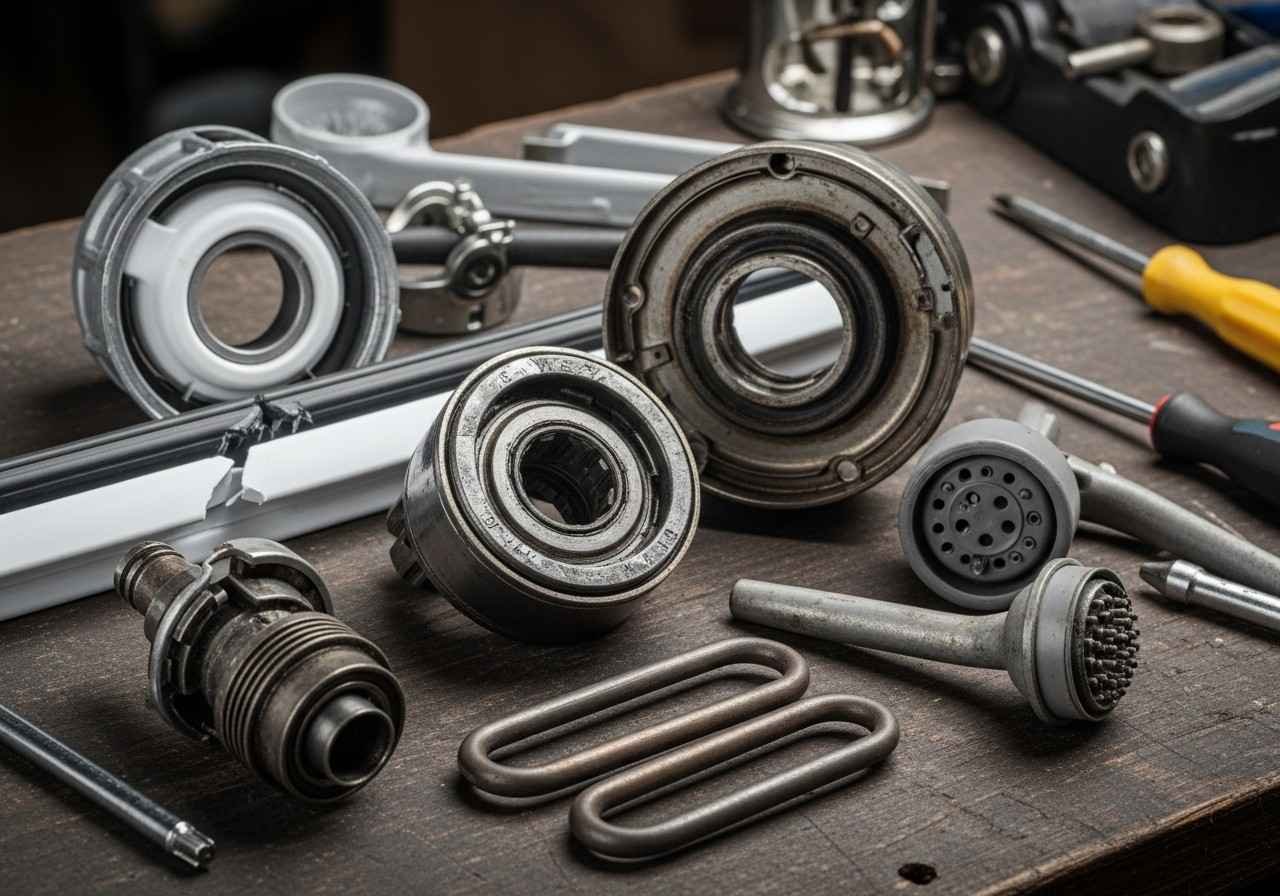
In washing machines, drum bearings are often the first parts to break down due to the constant spinning and movement. If you notice unusual noises or vibrations, it could be time to replace the bearings. Replacing them requires disassembling the drum, so this may require professional assistance or a detailed appliance repair parts guide. - Oven Parts: Heating Elements
If your oven isn’t heating up properly, chances are the heating element has worn out. Oven parts like heating elements can often be replaced with simple tools and can restore your oven to full functionality. Be sure to consult your oven’s manual for the specific replacement part and installation process. - Dishwasher Parts: Spray Arms
Spray arms in dishwashers can get clogged or damaged over time, especially if hard water deposits build up. If your dishes aren’t getting clean, inspect the spray arms for blockages or cracks. Replacing spray arms is typically a straightforward process and can improve your dishwasher’s performance. - Fridge Parts: Thermostats
A malfunctioning thermostat is another common issue with fridges. If your fridge is either too cold or not cold enough, the thermostat may be to blame. Replacing the thermostat is usually a simple process and can restore your fridge to its optimal temperature. - Washer Parts: Water Pump
If your washing machine stops draining water, the water pump could be the issue. Over time, the pump can become clogged or break. DIY appliance repair Australia enthusiasts can replace this part with a few tools, but it’s a more complicated fix that may require some disassembly. - Oven Parts: Igniters
If you have a gas oven, the igniter is a crucial part that can fail over time. When the igniter fails, your oven won’t light, and cooking becomes impossible. Replacing igniters is relatively easy, but make sure to use the correct part for your model. - Fridge Parts: Condenser Coils
Dirty condenser coils can lead to poor cooling efficiency and higher energy costs. Cleaning the coils regularly is important, but if they’re damaged, they’ll need to be replaced. Condenser coils are often located at the back or beneath the fridge, so replacing them is a fairly simple process. - Dishwasher Parts: Water Inlet Valve
A clogged or malfunctioning water inlet valve is a common cause of dishwashers not filling properly. Replacing the valve can often fix the issue and restore your dishwasher’s performance. Make sure to consult your appliance’s manual for instructions on replacing this part. - Washer Parts: Drive Belt
A broken drive belt in a washing machine will cause it to stop spinning or agitate properly. Replacing the drive belt is one of the more common DIY repairs, and the part is relatively inexpensive. Check the drive belt regularly for wear and replace it if necessary.
How to Replace Appliance Parts
Replacing appliance repair parts can be straightforward, but knowing the right steps is crucial. Here’s a general guide to help you:
- Turn off Power
Always unplug the appliance or turn off the power supply to avoid electrical hazards when replacing parts. - Refer to the Manual
Check the appliance’s manual for part numbers and specific instructions on disassembly. - Order the Right Part
Make sure to buy the correct replacement part, such as genuine appliance parts. It’s essential to match the part number and model to ensure compatibility.
Follow Safety Precautions
Use proper tools and protective gear. For complex repairs, you may need professional help, especially for internal components.